
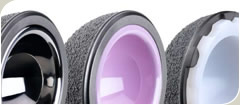
Big Head Technology
Demands of the modern patient have changed. They wish to be informed of innovations and cutting edge technology.
The young patient with a higher activity profile requires a stable hip joint without restriction.
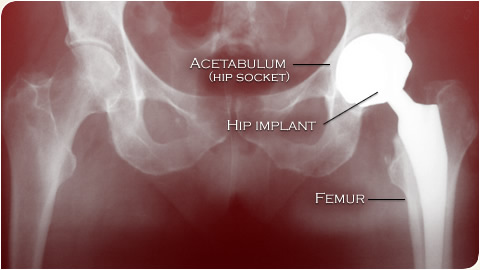
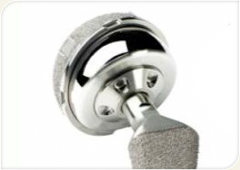
With big femoral heads, the choice is either a metal on metal (MoM), ceramic on ceramic or ceramic on metal bearing surface. The large head simulates the patient's own femoral head and so feels natural in function, while also increasing stability which in turn reduces the risk of dislocation.
Big head bearing surfaces are exceptionally smooth and have a low coefficient of friction. The technological advances in bearing materials have resulted in reduced wear which should give increased longevity to the hip joint.
It should however be noted that big head MoM total hip replacement (THR) has largely been 'abandoned' by surgeons in the UK. Audited results ranged from 21% revision rate at 4 years, to 49% at 6 years for the ASR XL device. Other devices showed higher revision rates at around 12-15% at 5 years.
Debris is generated from any bearing surface and increased wear of the MoM bearing surfaces has been noted. Wear and/or corrosion were also identified at the trunnion-taper junction between the metal head and the stem. Cobalt and Chromium ion levels may be elevated and may initiate pain.
Symptomatic patients should be investigated appropriately. Radiographs may show loosening and osteolysis and ultrasound and MRI scans may show fluid collections, cystic and/or solid masses.
The use of large diameter MoM bearings in primary THR should be carefully considered and possibly avoided.
Revision procedures can be complicated if there is significant soft tissue damage and may require specialist reconstruction techniques for revision hip surgery.
This is in contrast to the use of conventional polyethylene which is restricted to socket/liners with small heads to reduce the frictional torque and thus reduce polyethylene debris. Crossed linked polyethylene may reduce wear in patients with lower activity. However, some manufacturers have used crossed linked polyethylene with larger heads. This may be possible with vitamin E polyethylene when used as a cemented cup or as a liner within the acetabular shell.
The aim of THR is for longevity of the artificial hip joint with unrestricted activity, hip joint stability and the elimination of dislocation.